News
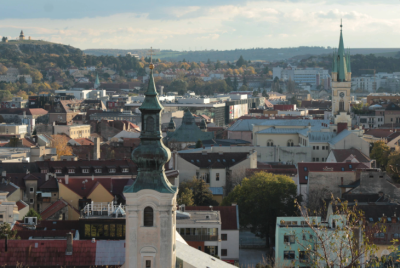
Improving air quality will require increased interest and awareness of local governments in the area of air protection.
24. 03. 2025
 Air
Air
In connection with the Environmental Impact Assessment (SEA) process and the Air Protection Act, a public hearing was held on March 11, 2025 on the draft Air Quality Improvement Program (AQIP) for the Nitra Region zone and the Strategic Document Evaluation Report.
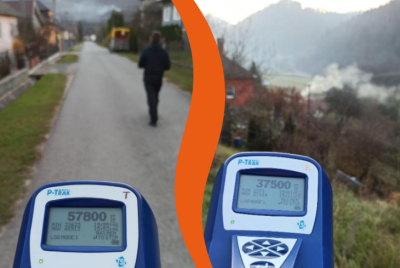
Measuring ultrafine particles from local heating sources: How to reduce emissions from households?
10. 03. 2025
Heating
In the locations of Gemerská Poloma, Dobšiná, Kozelník, Banská Belá and Banská Štiavnica, informative measurements of air pollution by ultrafine dust particles (UFP) were carried out at the beginning of November 2024. The aim of the measurements was to determine the extent to which heating with solid fuels affects UFP air pollution in selected areas and cities of Slovakia. Measurements focused on household pollution were carried out as part of the Populair project activities in cooperation with the civic association CEPTA.
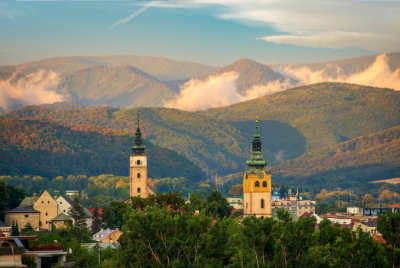
Without support from relevant stakeholders, municipalities will struggle to address air pollution
26. 02. 2025
Air
In connection with the Strategic Environmental Assessment (SEA) process, a public hearing was held on 12 February 2025 on the draft Air Quality Management Plan (AQMP) for the Banská Bystrica region (BBSK) and the Strategic Document Assessment Report.
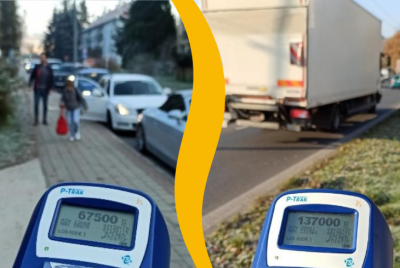
Measurement of ultrafine particles shows how sensitive the air is to changes. How can we influence these changes?
21. 02. 2025
Mobility
From 7 to 12 November 2024, an informative measurement of air pollution by ultrafine particles (UFP – from the English “ultrafine particle”) was carried out in Sereď, Banská Bystrica, Čertovica, and Prešov. The aim of the measurements was to determine the extent to which road traffic affects UFP pollution in inhabited areas of Slovakia. Traffic-related pollution measurements were conducted as part of the Populair project in cooperation with the non-governmental organization CEPTA.

Through cooperation in the Košice region, we are gradually approaching an important milestone in air protection.
18. 02. 2025
Air
In connection with the assessment of the impacts of strategic documents on the environment (SEA), a public discussion of the Report on the Assessment and Proposal of the Air Quality Improvement Program (PZKO) for the Košice agglomeration and the Košice Region zone was held on February 4, 2025.
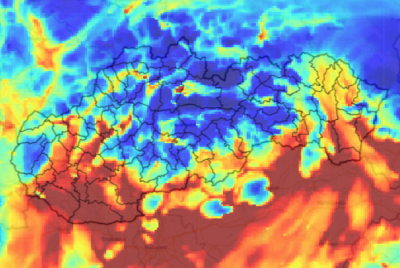
Air quality forecasts
17. 01. 2025
Air
The Slovak Hydrometeorological Institute informs about the air quality forecasting service. The data is available through the CAMS (Copernicus Atmosphere Monitoring Service). The forecast products also include forecasts of natural dust concentrations. This is mostly dust from deserts or semi-deserts - in Slovakia it is the most frequently occurring "Saharan dust".
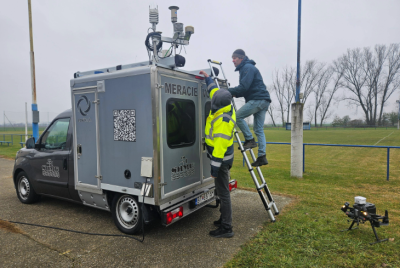
Drones in the fight against air pollution
30. 12. 2024
Air
At the end of November, a unique experiment was carried out in the Trnava region, in the small village of Blahová. For the first time in Slovakia, a drone was used to measure air pollution, which represents a revolutionary step in air quality monitoring. The experiment was carried out in cooperation with the Populair project, the UAVONIC company and the Slovak Hydrometeorological Institute. The measurements focused on investigating the impact of heating on air quality, which is a very topical problem in Slovakia, especially in the winter months.

Competences of municipalities in implementing legislative requirements in the field of air quality
18. 12. 2024
Awareness
The Slovak Environmental Agency, in cooperation with the Ministry of the Environment of the Slovak Republic, organized two 2-hour online workshops for representatives of local governments who fulfill delegated state administration functions in the field of air protection on December 10 and 12, 2024. The workshops focused on current information and guidelines for the application of legislative requirements in the field of air quality.
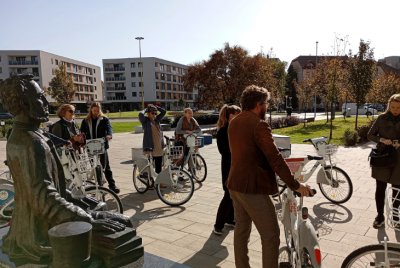
Quality public space for all - study trip 2024
25. 11. 2024
Awareness
A study tour took place in mid-October 2024, providing participants with the opportunity to learn about good practice examples in the field of sustainability and urban development in three countries – Austria, Slovenia and Hungary. Over the course of four days, they visited the cities of Vienna, Maribor, Ljubljana, Budapest and Győr.
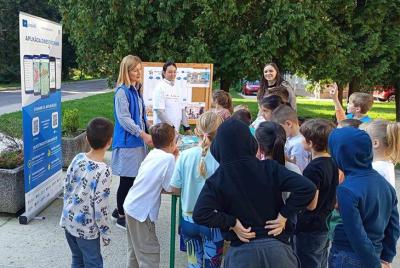
Step by step to improve public spaces in front of schools
02. 10. 2024
Mobility
As part of the European Mobility Week, SEA employees continued the activity "Go to school on your own" at Golianova Primary School in Banská Bystrica. The aim of the activity, implemented as part of the LIFE IP project - Improving air quality, is to raise the awareness of pupils, parents and teachers about the importance of walking and cycling as an alternative to the use of cars when transporting children to school.
Categories:
Archive: