New
Small Changes on the Road, Big Benefits for Air Quality
01. 06. 2026
 Mobility
Air quality affects everyone's health. One of the major sources of air pollution in cities is transport. The way we choose to travel every day influences not only the environment around us, but also the character of our streets, public spaces, and overall quality of life. Sustainable mobility is not about giving up convenience, it is about finding a sensible balance between different modes of transport.
The Problem Is Not Only the Engine, but Also the Number of Cars
When discussing transport, we often focus on vehicle technologies and fuel types. However, the sheer number of vehicles on the road also plays an important role. More cars mean more traffic congestion, greater demand for public space, and increased environmental pressure. That is why it is important to create conditions that allow people to make at least some of their everyday journeys without using a car.
Why are cars one of the main sources of air pollution? Watch this short video:
https://www.youtube.com/shorts/KslJsh2pT_c
How Much Space Do We Dedicate to Parking?
Cars spend most of their time parked. Yet parking occupies a significant share of public space that could otherwise be used for people, green areas, or recreation. Parking is therefore not only a transport issue, it is also about how we want our cities and municipalities to function and what kind of public spaces we want to create.
Some Trips Are Better by Bicycle
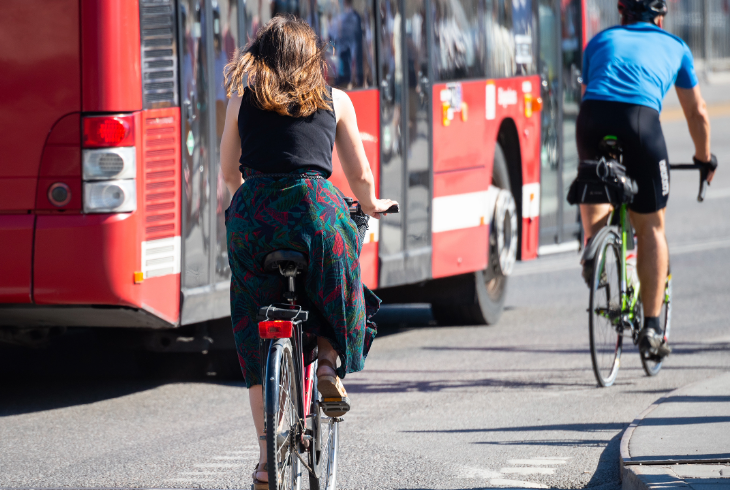
Many everyday journeys are short enough to be made by bicycle. Cycling is an efficient form of transport that produces no local emissions while also supporting an active lifestyle. Where safe cycling infrastructure is available, bicycles can become a natural part of everyday travel.
Walking Is Our Most Natural Way to Get Around
Walking is the most fundamental form of movement and the most accessible mode of transport. Every journey made on foot contributes to a healthier lifestyle and livelier streets.
Discover Streets from a Pedestrian's Perspective
When we move through a city on foot, we experience its atmosphere, its people, and its public spaces in a completely different way. Well-maintained sidewalks, safe pedestrian crossings, and pleasant surroundings encourage people to spend more time outdoors. Streets become places where people live and interact, rather than simply corridors for traffic.
Children Need Safe Spaces to Move
Children need opportunities to move safely, explore their surroundings, and spend time outdoors. Safe public spaces support their independence, healthy development, and daily physical activity. Environments designed with children in mind are generally safer and more enjoyable for everyone.
Children Are Particularly Vulnerable to Traffic-Related Air Pollution
Children are among the groups most sensitive to air pollution. Their bodies are still developing, making them more vulnerable to the harmful effects of polluted air than adults. Reducing emissions from transport therefore helps protect the health of future generations.
Leave the Car at Home Occasionally and Use Public Transport
Public transport can move large numbers of people efficiently while creating a lower environmental impact per passenger. We do not have to travel the same way every day. Even choosing the bus, tram, or train occasionally can help reduce traffic congestion and contribute to cleaner air.
Traffic Congestion Worsens Air Quality, Outside and Inside Vehicles
Traffic jams do more than waste time, they also increase concentrations of air pollutants. Vehicles in congestion stop and start repeatedly and often remain stationary with their engines running. Poor air quality affects not only pedestrians and people living near busy roads, but also drivers and passengers inside vehicles.
Waiting? Switch Off Your Engine
A stationary vehicle with the engine running still produces emissions. Whether waiting outside a school, a shop, or in a car park, there is often no need to keep the engine running. Switching it off is a simple action that helps reduce air pollution exactly where people are nearby.
Every journey made on foot, by bicycle, or by public transport can contribute to cleaner air and more pleasant communities. Sustainable mobility is not about finding one perfect solution. It is about having the opportunity to choose the mode of transport that best suits both our needs and the environment around us.
You can learn more about the principles, planning, and implementation of sustainable urban mobility in these publications:
Sustainable Urban Mobility – Principles and Planning:
https://populair.sk/storage/web-documents/183/skoliaci-material-mobilita-upr-web.pdf
Principles and Implementation of Sustainable Mobility:
https://populair.sk/storage/web-documents/1382/brozura-um-populair-final-web-resized.pdf