New
From Legislation to Practice: Shared Challenges in Air Quality Protection
19. 10. 2026
 Air
On 15 and 16 October 2026, air quality professionals gathered for a seminar entitled “Air Quality Management at District Offices and the Slovak Environmental Inspectorate (SIŽP)”. Representatives of the Ministry of Environment of the Slovak Republic, the Slovak Environmental Inspectorate, regional district offices and district offices discussed the current state of air quality management in Slovakia, the challenges they face in carrying out their responsibilities and opportunities to improve cooperation. The meeting of air protection authorities was initiated by the LIFE Populair project.
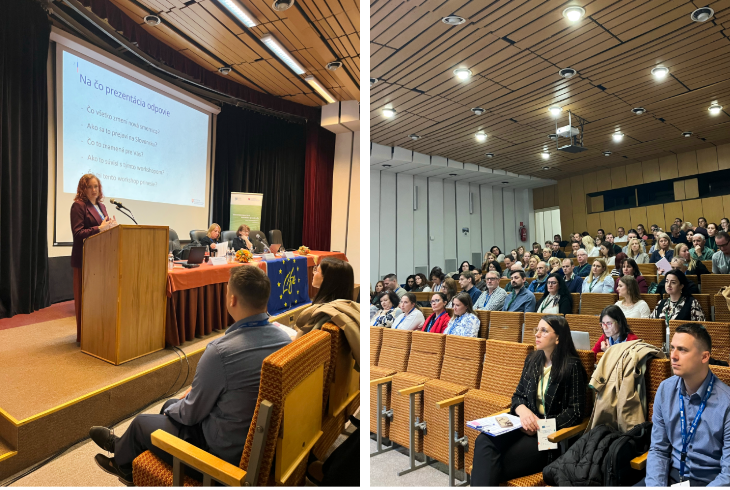
The first day of the seminar focused on the legislative framework, current priorities and identification of key challenges in air quality protection. Participants were introduced to the requirements of the Ambient Air Quality Directive, which entered into force at the end of 2024, and its implications for the work of air protection authorities. One of the major challenges for Slovakia will be meeting stricter pollutant limit values, which are intended to provide better protection for public health.
Particular attention was given to local household heating, which is one of the significant sources of air pollution, especially particulate matter emissions. Household heating with solid fuels represents a challenge that requires not only effective instruments at local authority level, but also a coordinated approach and cooperation between several government departments and institutions.
The professional programme also included a presentation of the Task Force initiative in the context of the forthcoming Air Quality Roadmap. This cross-sectoral initiative brings together several thematic areas, including energy and heating, transport, health and air quality, education and awareness-raising, and finance. The working group focusing on air quality management also addresses practical issues relating to the implementation of responsibilities and cooperation between the relevant authorities. The outputs of the individual working groups are intended to provide a basis for identifying and planning specific measures to improve air quality and meet the established limit values.
Examples of Good Practice and Joint Efforts to Find Solutions
The theoretical part of the programme was complemented by a presentation on comprehensive air protection measures at SMZ, a. s., Jelšava. This example from an industrial facility demonstrated opportunities for applying Best Available Techniques (BAT) in the production and processing of magnesite clinker and highlighted the importance of a comprehensive approach to emission reduction.
A moderated group-work session was another important part of the seminar. It gave participants an opportunity to identify the main problems and challenges encountered by district office and inspectorate staff in carrying out their responsibilities. During two working sessions, participants exchanged practical experiences, identified shortcomings and explored specific opportunities for improvement. Discussions focused not only on problematic situations, but also on effective existing practices, proposed measures and ways to improve cooperation between the various air protection authorities.
Practical Implementation Issues, Awareness-Raising and the ETS2 Agenda
The second day of the seminar focused on practical issues related to the implementation of air protection responsibilities. Representatives of district offices and the SEI discussed specific implementation challenges, uncertainties and field experience with experts from the Ministry of Environment of the Slovak Republic. The aim was to share knowledge, clarify practical questions and explore ways to harmonise and improve procedures.
A separate part of the programme was devoted to the awareness-raising package for municipalities developed as part of the LIFE Populair project. It comprises a range of information and educational activities designed to raise awareness of air quality. These include information materials, video and radio spots, widgets displaying current air quality conditions at regional monitoring stations, as well as awareness-raising events and educational campaigns.
These activities are intended for the general public and can also provide useful support for local authorities when informing residents. Their aim is to make air quality information more accessible, promote environmental awareness and improve public understanding of how air quality can be improved.
The programme also covered ETS2 (Emission Trading System 2), focusing on the basic framework of the system, related tasks and responsibilities, and practical aspects of its implementation. This session was intended primarily for staff of district offices based in regional capitals whose work involves this agenda.
Cooperation as the Foundation for Effective Measures
The seminar provided an opportunity to exchange experiences and identify needs arising from the day-to-day work of air protection authorities. The discussions generated several suggestions for improving the implementation of air quality management responsibilities.
Positive aspects included cooperation between district offices and the SEI, as well as the existing legislative instruments. The challenges identified included a shortage of specialists at local authority level. Given the large number of municipalities, ensuring sufficient professional capacity is difficult. The need to strengthen staffing at district offices was also highlighted.
Participants also proposed legislative amendments based on practical experience and improvements to the availability of information on the Ministry of Environment's website.
The issues and suggestions identified may serve as a basis for planning further steps in air quality management and for preparing and implementing measures under the Task Force initiative and the Air Quality Roadmap itself.
The seminar was held as part of the LIFE Populair project, co-funded by the European Union and the state budget of the Slovak Republic through the Ministry of Environment of the Slovak Republic.