New
Air protection is health protection
20. 04. 2026
 Air
Air
On April 14, 2026, the first meeting of the Air and Health working group took place. Air quality is a significant environmental factor affecting public health, and it is therefore in the interest of responsible authorities to adopt measures to improve it and protect public health. The working group is an initiative of the LIFE IP – Air Quality Improvement (Populair) project, aiming to identify areas that go beyond the competencies of the environmental sector and to seek solutions to improve air quality in the interest of protecting the health of Slovakia’s population and meeting international commitments.
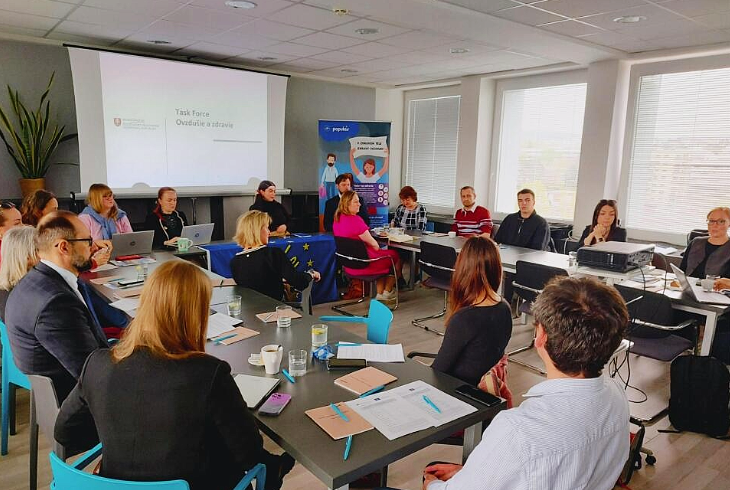
At the beginning of the meeting, information was presented on the state of air quality in Slovakia, the tightening of health protection limits at the EU level, and shared challenges in safeguarding public health.
During the discussion, members of the working group addressed the need for systematic data collection and evaluation to better understand the links between air quality and the health status of the population. The discussion focused in particular on possibilities for linking existing datasets and using them to assess the incidence of diseases and premature deaths. Regional experience clearly indicates a link between deteriorated air quality and an increased occurrence of non-communicable diseases.
Given that air pollution disproportionately affects the health of residents in marginalized Roma communities and low-income households, it is essential to connect the issue of air quality and health with the context of energy poverty. Only in this way is it possible to effectively identify local specifics and design support mechanisms for households that are forced, for economic reasons, to rely on unsuitable heating methods. (In Slovakia, household heating with solid fuels is the largest source of PM, BaP, and CO.)
Sufficient relevant data is key to quantifying the benefits of investments in measures to improve air quality. Analyses by international and European expert institutions (WHO, OECD, EEA) show that preventive measures are more cost-effective in the long term than addressing the consequences of poor air quality, as they reduce healthcare costs as well as losses caused by sick leave and premature deaths.
Participants also discussed the effectiveness of measures and communication towards the public. They agreed that awareness-raising plays an important role; however, without being linked to concrete systemic measures - especially in the area of household heating - it will not be sufficient. Particular attention was paid to timely public information during extreme or prolonged air pollution episodes, so-called smog situations, their forecasting, and the improvement of coordination and information systems.
The Air and Health working group includes relevant ministries and institutions. Its conclusions will be used in the preparation of the National Air Quality Plan - the so-called air quality roadmap.